Black Granite Worktops: Types, Care and What to Know Before You Buy
Black granite is one of the most enduring choices in UK kitchen design. It is hard, heat-resistant, and holds its look well in both contemporary and traditional settings. But black granite is not a single material. There are several distinct varieties, each with a different visual character, mineral composition, and price point. Understanding the differences before you choose helps you pick the right stone for your kitchen and avoid surprises after installation.
The Main Types of Black Granite
Absolute Black
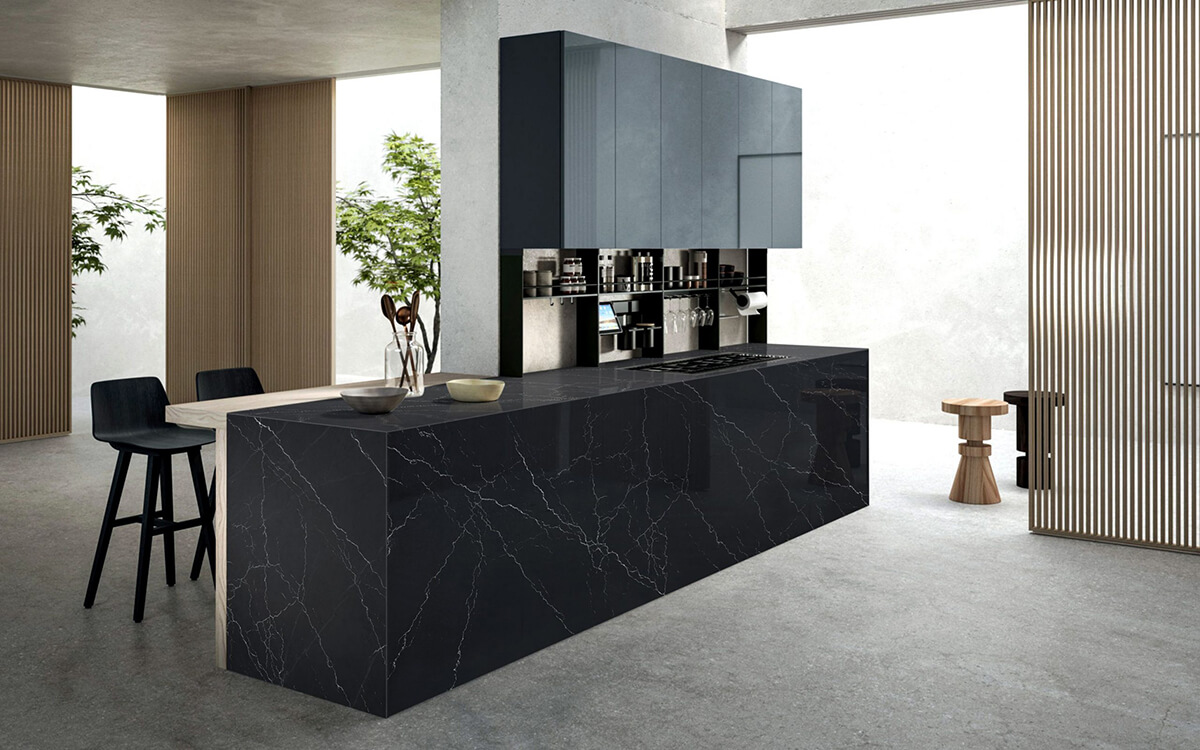
Absolute Black is the most uniformly dark granite available. It has a consistent, near-jet surface with very little visible grain or movement. This makes it the preferred choice for modern and minimalist kitchens where a clean, uninterrupted surface is the priority. Technically, some stones sold as Absolute Black are dense basalt or diabase rather than true granite, but they share the same hardness and performance characteristics. The visual uniformity of Absolute Black means joins between slabs are less visible than on more patterned stones, which suits larger kitchens with long worktop runs.
Black Galaxy
Black Galaxy is quarried in India and immediately recognisable by its gold and copper-coloured bronzite flecks scattered across a dark base. Their density varies between slabs, so no two pieces are identical. It suits kitchens where warmth and visual interest are wanted within a dark palette, pairing well with timber cabinetry and brass or gold hardware. Viewing the actual slab before committing is advisable.
Black Pearl
Black Pearl granite has a deep charcoal base with a subtle silver and dark grey crystalline pattern that becomes more visible in certain lighting conditions. Its finish has a slight iridescence that sets it apart from flatter black surfaces. Black Pearl works well in kitchens where the worktop needs to hold its own visually without being as high-contrast as Absolute Black. It suits both polished and leathered finishes particularly well.
Nero Impala
Nero Impala is a South African granite with a consistent dark grey to near-black base and small, evenly distributed white and grey mineral flecks. It is one of the more understated black granites, with a pattern that reads as dark from a distance but reveals its texture close up. Nero Impala is popular in traditional and transitional kitchens where a very dramatic surface would feel out of place but a warm, natural stone look is still wanted.
Ubatuba
Ubatuba is a Brazilian black granite with a dark green-black base speckled with gold and green mineral deposits. In most lighting it reads as black, but in natural light a green undertone becomes visible. It suits kitchens with earthy tones and natural materials, and handles heat particularly well, making it a practical choice for cooking-intensive kitchens.
How to Care for Black Granite Worktops
Black granite is durable and long-lasting, but it requires some routine care to keep it performing and looking its best.
Sealing
Granite is a porous natural stone and needs to be sealed to protect against staining. Your installer should seal the worktop on the day of installation. After that, resealing once a year is the standard recommendation for kitchen worktops in regular use. To check whether sealing is needed, pour a small amount of water on the surface: if it beads up, the seal is intact; if it absorbs into the stone, it is time to reseal. Sealant is available from stone care suppliers and most hardware retailers for £10 to £30, and the process takes around 30 minutes.
Daily Cleaning
For everyday cleaning, warm water and a pH-neutral cleaner or mild washing-up liquid is all you need. Wipe the surface with a soft cloth and dry it after cleaning rather than leaving water to evaporate, particularly in hard-water areas across London, Essex, Hertfordshire, and Kent, where limescale deposits on dark surfaces are more visible than on lighter stone.
What to Avoid
Avoid acidic or alkaline cleaning products including bleach, vinegar, and citrus-based sprays. These can break down the sealant over time and, with repeated use, affect the surface of the stone. Abrasive scouring pads should also be avoided as they can dull a polished finish. For stubborn marks, a specialist stone cleaner is preferable to reaching for a general-purpose product.
Polished vs Honed vs Leathered Finishes
Polished black granite is highly reflective and shows depth of colour strongly, but picks up fingerprints and watermarks readily. A honed matte finish disguises daily marks better, though it requires consistent sealing as it is slightly more absorbent. A leathered or brushed finish offers a tactile texture that hides surface marks well and suits more casual kitchen styles.
What to Know Before You Buy
Natural Variation Between Slabs
No two slabs of black granite are exactly alike. Mineral fleck density, base colour intensity, and the presence of natural fissures can all vary. For kitchens with multiple sections or a large island, slabs should be selected together. It is worth visiting the stone yard to view and approve slabs in person before they are cut.
Watermarks and Maintenance Visibility
Dark surfaces show watermarks, limescale, and fingerprints more visibly than lighter stone. This is not a flaw in the material, but it is a daily reality worth understanding before you choose black granite for a busy kitchen. Drying the surface after use and keeping on top of sealing significantly reduces this. Homeowners who are prepared for this tend to be very happy with their black granite; those who are not can find it frustrating.
Confirm the Stone Type with Your Supplier
Some materials sold as black granite are technically other dense igneous rocks such as basalt or gabbro. These perform comparably in most respects, but a reputable fabricator should be able to confirm the origin and composition of the stone you are buying.
Frequently Asked Questions
Which type of black granite is the most popular for kitchens?
Absolute Black is the most widely specified black granite for UK kitchen worktops, primarily because of its consistent, uniform appearance and clean look in modern kitchen designs. Black Galaxy is the second most common choice, particularly in kitchens where some warmth and visual interest are wanted within a dark palette.
Does black granite show scratches easily?
Granite is highly scratch-resistant and does not show scratches under normal kitchen use. It scores between 6 and 7 on the Mohs hardness scale, which means most kitchen objects including knives, keys, and ceramic cookware will not mark the surface. Using a chopping board is still recommended to protect both the worktop and your knife edges.
How often does black granite need to be sealed?
Once a year is the standard recommendation for kitchen worktops in regular use. The water bead test is the simplest way to check: if water beads on the surface, the seal is working. If it soaks in, reseal. The process takes around 30 minutes and requires only a standard stone sealant.
About Almaz Worktops: Almaz Worktops specialises in the supply and installation of granite, quartz, marble, porcelain, and quartzite worktops for homeowners and trade clients across London, Essex, Hertfordshire, Kent, and Cambridge. All worktops are fabricated in-house at the Harlow workshop, with a typical turnaround of 7 to 10 working days from template to installation.