
Choosing kitchen cabinets is a big decision, but the worktop has just as much influence on the finished room. It sits alongside the cabinet doors every day, covers a large surface area and needs to work well for cooking and cleaning.
There isn’t one worktop colour that suits every cabinet. The best choice depends on the cabinet colour and finish, the look you want, the other surfaces in the room and how you use your kitchen. Use this guide to compare your options before choosing a material.
1. Start with your kitchen cabinets
Before choosing a worktop, look closely at the cabinets you have chosen or plan to keep. Their colour, finish and style will help you narrow down the worktop colours and patterns that may suit your kitchen.
See how your cabinet colour looks in your kitchen lighting
A cabinet sample can look different in a showroom, online or at home. Natural light, artificial lighting and nearby colours can all affect how a shade appears.
If possible, view your cabinet sample in the kitchen at different times of day. Notice whether it looks warmer, cooler, lighter or darker in the room than you expected.
Consider the Finish and Style
The cabinet finish matters as much as its colour. For example:
- Gloss cabinets reflect light and often suit a clean, contemporary look.
- Matt or painted cabinets can create a softer, understated feel.
- Wood-effect or timber cabinets bring visible grain and natural texture into the room.
- Traditional cabinet styles may suit a worktop with natural variation or a more classic pattern.
These are starting points, not fixed rules. A contrasting worktop can work well with traditional cabinets, just as a natural-looking surface can soften a modern kitchen.
2. Decide whether you want contrast or coordination
One of the easiest ways to narrow your kitchen worktop ideas is to choose between a contrasting look and a more coordinated one.
Option A: Create contrast
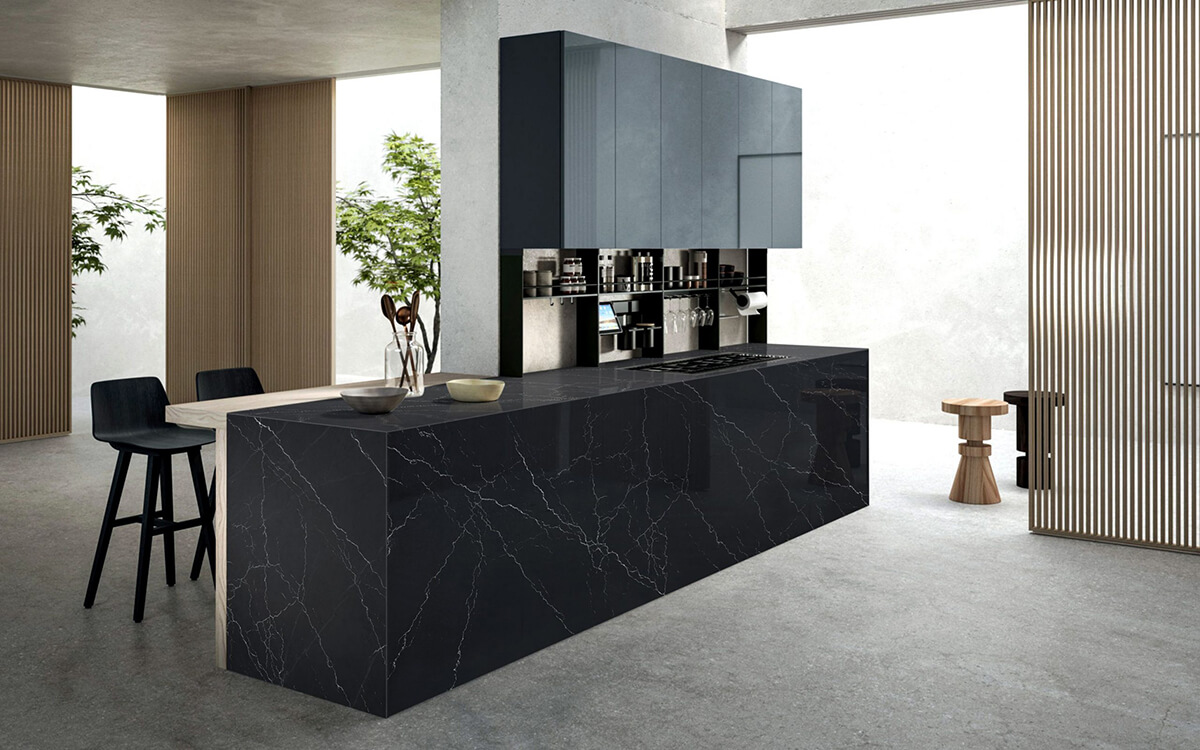
A contrasting worktop stands apart from the cabinets. For example, a light surface can stand out against dark cabinets, while a darker worktop can add definition to lighter units.
Contrast can also help distinguish one part of the kitchen from another. You might choose a different worktop for an island, or use the worktop to create a visual break between cabinets and flooring.
Option B: Keep the look coordinated
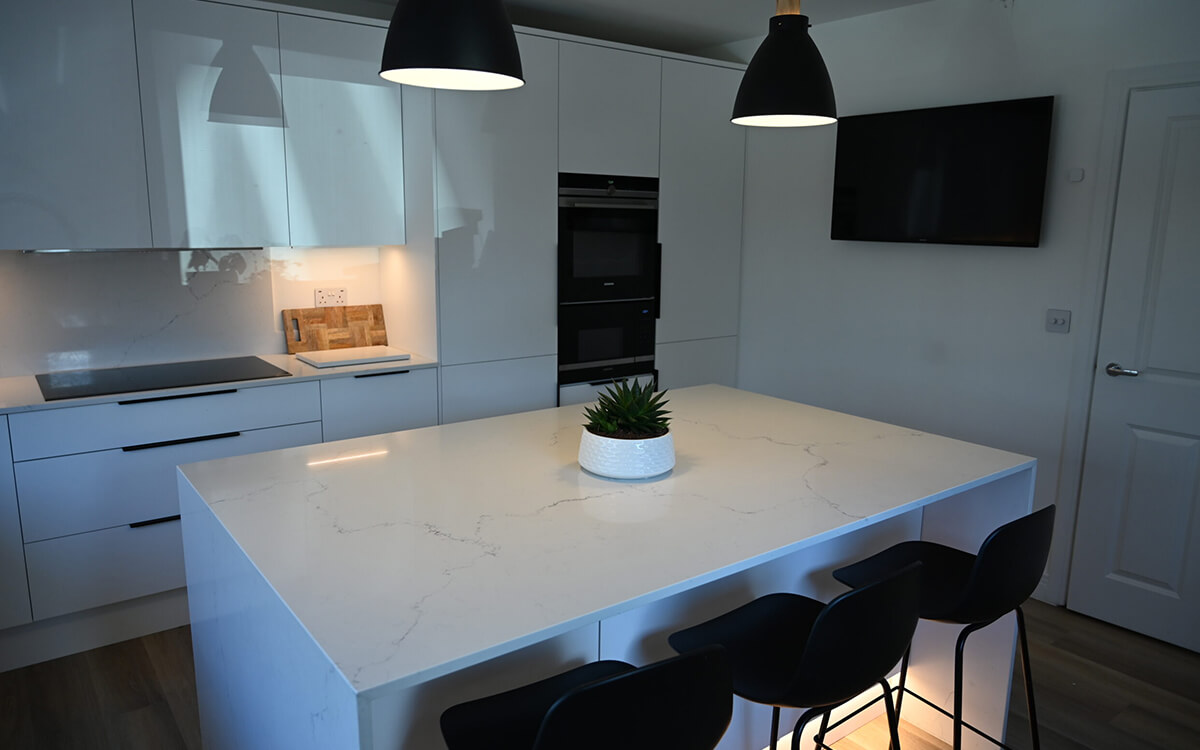
A coordinated scheme uses colours and finishes that sit comfortably together. The worktop doesn’t need to be an exact match. It could share a similar undertone, or pick up a colour from the flooring, splashback or cabinet handles.
This approach may suit a kitchen with several other noticeable features, such as patterned flooring or a bold splashback. A quieter worktop can help the whole room feel balanced.
Ask yourself: Do you want the worktop to be a feature, or should it sit quietly alongside the cabinets? Answering this can help you decide whether to choose a bold pattern, a strong contrast or a more subtle surface.
3. Compare worktop colours, patterns and materials
Colour is only one part of the decision. The material and pattern affect how the worktop looks across the full kitchen.
A plain surface can balance cabinets with a strong colour or visible grain. A worktop with a noticeable pattern can bring character to a kitchen with plain cabinet fronts. Before you decide, consider how much of the pattern will be visible across the main worktop runs, around joins and beside the sink or hob.
Different materials offer different colours, patterns and finishes. For example:
- Quartz worktops are available in a wide choice of designs, including uniform colours and marble-effect patterns.
- Granite worktops have natural variation, so slabs can differ in appearance.
- Almaz’s worktop materials page lets you explore a range of available materials and colours.
When comparing materials, ask your supplier about care requirements and suitability for your kitchen. Find out whether the selected surface needs sealing, how to clean it and what precautions to take around hot cookware or spills.
Remember: Choose for appearance and everyday use. A worktop should look right with your cabinets and suit the way you use the kitchen.
4. See How the Worktop Fits with the Rest of the Kitchen
Your worktop and cabinets are part of a wider design. Consider how the worktop will look alongside your flooring, walls, splashback, handles, taps and appliances.
Before making a decision, check your preferred worktop against:
- The flooring colour and pattern
- The splashback or wall finish
- Cabinet handles and other metal finishes
- The colour and style of appliances
- Check how much daylight reaches the kitchen, as this can change how worktop and cabinet colours appear.
If your flooring or splashback already has a strong pattern, a simpler worktop may help avoid too many competing details. If the cabinets and other finishes are relatively plain, a more distinctive worktop could become a focal point.
5. How to Pair Worktops with Different Cabinet Styles
Use these combinations as inspiration. The right choice will depend on the exact shades, patterns and lighting in your kitchen.
| Cabinet style or colour | Worktop approach to consider |
| Light-coloured cabinets | Choose a similar light tone for a coordinated look, or a darker surface for contrast. |
| Dark cabinets | Compare with lighter surfaces if you want the worktop to stand out. |
| Wood-effect or timber cabinets | Look for a pattern that complements the grain without competing with it. |
| Strongly coloured cabinets | A neutral worktop can let the cabinet colour take the lead. |
| Two-tone cabinets | Choose whether the worktop should connect the two cabinet colours or contrast with both. |
There’s no need to follow these suggestions exactly. Use them to create a shortlist, then compare real samples.
6. View Samples Before Making your Final Choice
Online photos and small swatches can help you explore options, but they may not show how a full worktop will look in your kitchen. Colours can appear different on screens, and a small sample may not show the full pattern or variation of a material.
When comparing samples:
- View them beside your cabinet doors.
- Check them against your flooring and splashback.
- Look at them in daylight and under your kitchen lighting.
- Ask to see a larger sample if the worktop has a noticeable pattern.
- Ask about care and installation before making your final decision.
If you’re in Essex, you can contact Almaz Worktops about visiting the Harlow showroom to view materials and discuss your project.
Questions to ask Before Choosing
Before confirming a worktop, ask your supplier:
- What care does this material need?
- Will the colour or pattern vary between samples and slabs?
- What edge profiles and finishes are available?
- When will the kitchen units need to be ready for templating?
- What is included in the quotation, such as templating, fabrication and installation?
Getting clear answers can help you compare options and understand what to expect from the process.
Frequently asked questions
Should the worktop match the kitchen cabinets?
Not necessarily. Some kitchens use similar tones for a coordinated look, while others use contrast to make the worktop stand out. Compare samples with your cabinets and other finishes before deciding.
What worktop colour goes with most kitchen cabinets?
There isn’t one colour that works with every cabinet. The best choice depends on the cabinet shade, flooring, lighting and the overall look you want. View samples together rather than relying on colour names or online photos.
How do I choose a worktop pattern?
Consider the other patterns and textures in the kitchen. A simple surface can balance patterned flooring or cabinets, while a more distinctive worktop may add interest to a simpler scheme. If possible, view a larger sample to see how the pattern looks across a wider area.
What should I compare besides colour?
Compare the material, pattern, finish, care requirements, edge options and installation process. Ask what is included in the quotation and how the chosen surface should be maintained.
Choose a Worktop that Works for your Kitchen
The right worktop should suit your cabinets, complement the rest of the room and meet your practical needs. Start by looking at the cabinet colour and finish, then decide whether you prefer contrast or coordination. Compare materials, view samples in your kitchen lighting and ask about care before choosing.
To explore available styles, browse Almaz’s worktop materials or get in touch to discuss your kitchen.