How to Choose the Right Kitchen Worktop Material
Choosing a kitchen worktop is one of the most important decisions in any kitchen project. The worktop is a surface that will be used every day for food preparation, cooking and general household activities, so it needs to be both durable and visually suitable for the overall design of the kitchen.
With a wide range of materials available, many homeowners find it difficult to decide which option is most appropriate. Popular choices in the UK include quartz, granite, marble and porcelain worktops, each offering different benefits in terms of durability, maintenance and appearance.
This guide explains how to evaluate kitchen worktop materials so you can choose a surface that suits your kitchen design, lifestyle and budget.
Quick Answer
The best kitchen worktop material depends on how the kitchen will be used. Quartz is often chosen for low maintenance and durability, granite offers natural stone character and strong heat resistance, marble provides a premium aesthetic, while porcelain worktops offer excellent heat resistance and modern design options.
Key Factors to Consider When Choosing a Worktop
Selecting the right material usually involves balancing several practical and aesthetic considerations.
These include durability, maintenance requirements, visual style and overall cost.
Durability and Daily Use
Durability is one of the most important factors when selecting a worktop. Kitchen surfaces must withstand daily activities such as chopping, placing cookware and cleaning.
Different materials perform differently in this area.
Quartz and granite are both known for their durability and resistance to scratching. Porcelain also performs well against heat and scratches. Marble, while attractive, is generally softer and can be more susceptible to marks or etching.
For busy family kitchens, surfaces with strong durability and stain resistance are often the most practical option.
Maintenance Requirements
Some worktop materials require more maintenance than others.
Quartz kitchen worktops are non porous and require minimal maintenance. They do not usually require sealing and can be cleaned with mild household cleaners.
Granite kitchen worktops are a natural stone that may require occasional sealing to maintain stain resistance. Marble may require more regular care because it is more porous.
Porcelain worktops are typically low maintenance due to their dense, non porous surface.
Understanding how much maintenance you are comfortable with can help narrow down suitable materials.
Appearance and Design Style
The worktop has a significant influence on the visual style of a kitchen. Some homeowners prioritise natural stone patterns, while others prefer consistent engineered finishes.
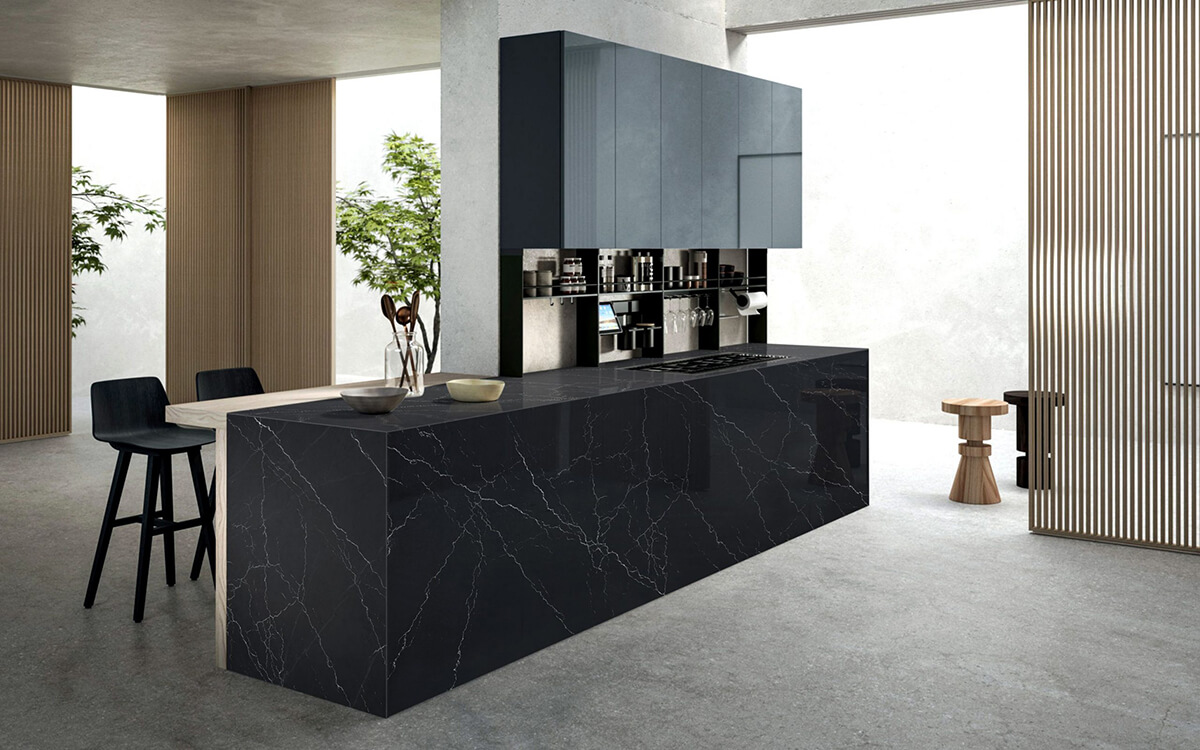
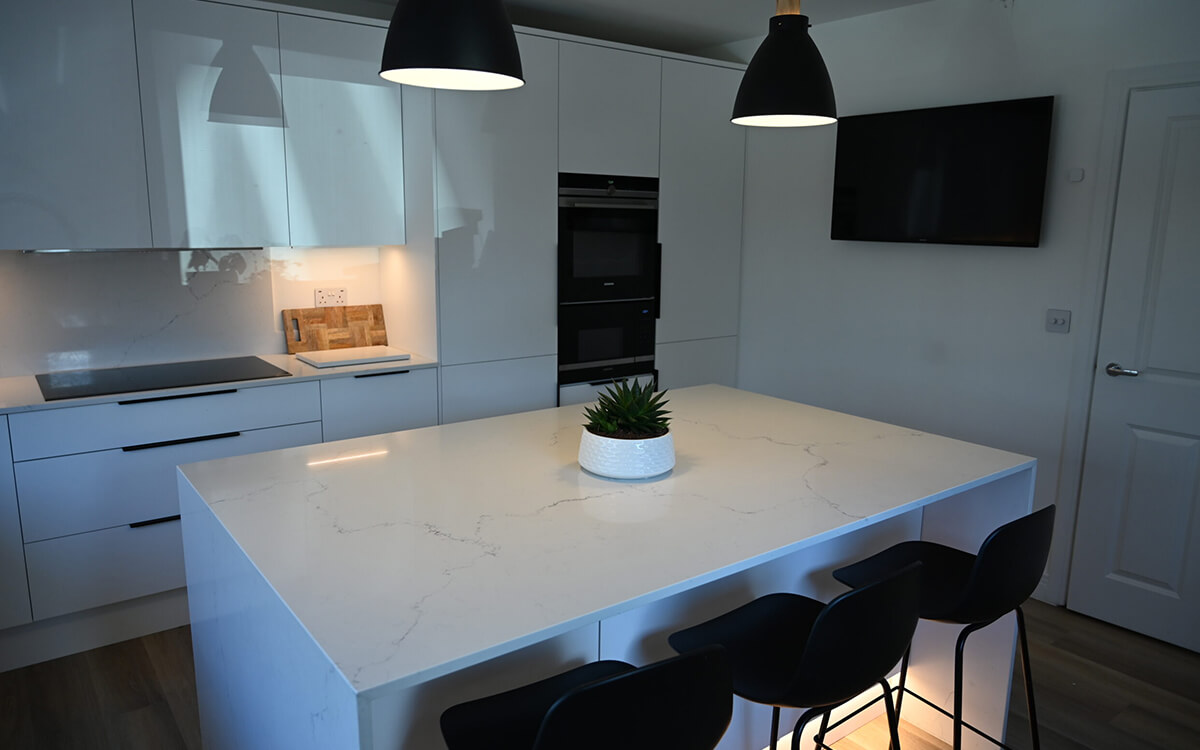
Quartz worktops offer a wide range of colours and styles, including marble inspired designs with controlled veining.
Granite provides natural mineral patterns that are unique to each slab, which can add character to the kitchen.
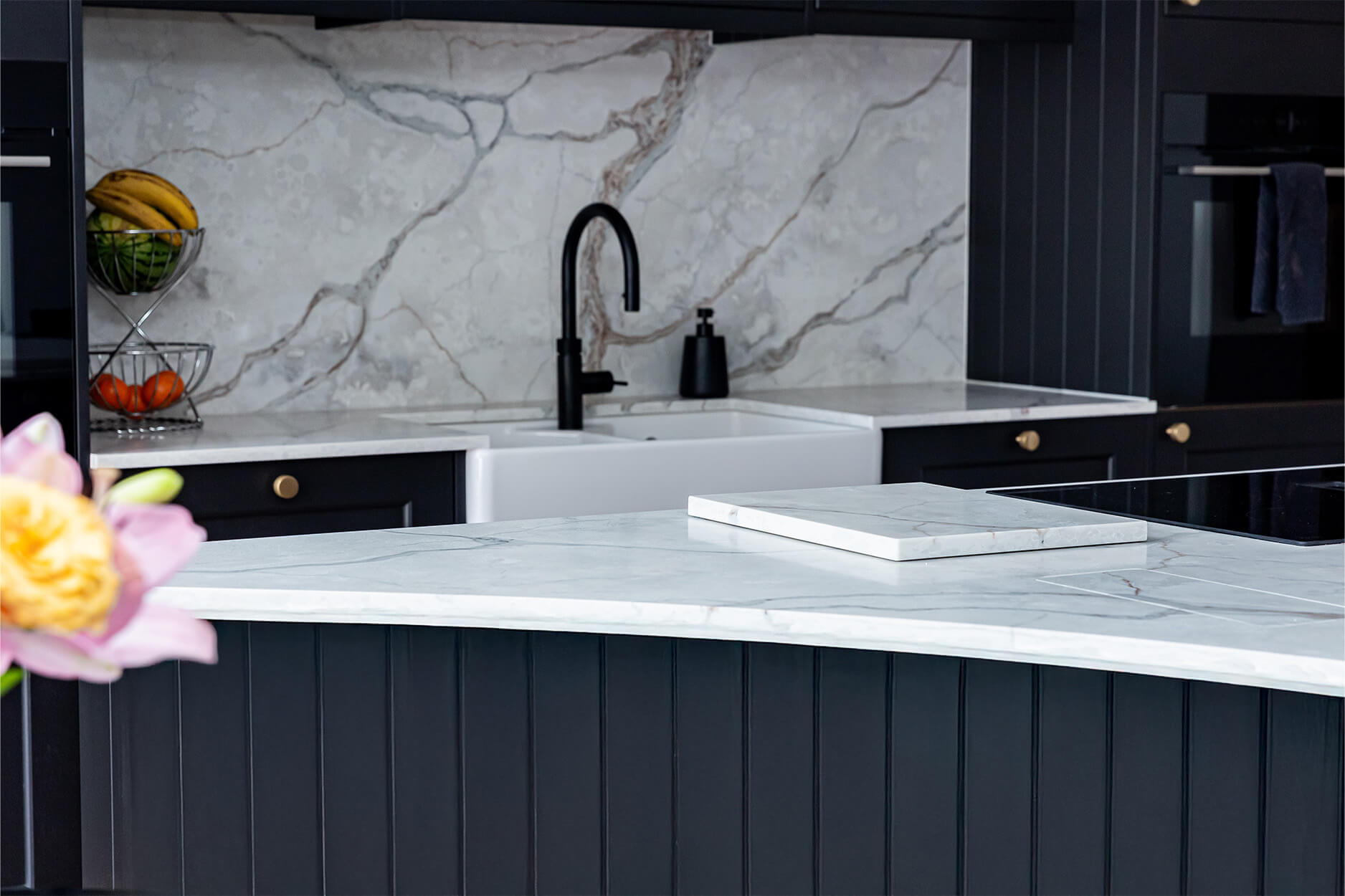
Marble is known for its distinctive veining and classic appearance, often used in more traditional or luxury kitchen designs.
Porcelain surfaces are increasingly popular in modern kitchens because they can replicate natural stone or concrete finishes while maintaining a sleek appearance.
Heat Resistance
Heat resistance is another factor worth considering, particularly for households that cook frequently.
Granite and porcelain worktops are generally very heat resistant. Quartz worktops can tolerate moderate heat but may be affected by very high temperatures because of the resin content used in manufacturing.
Using trivets or heat pads is recommended for most worktop materials to help protect the surface.
Budget and Overall Cost
Kitchen worktop costs can vary widely depending on the material, design and installation requirements.
Quartz and granite are typically positioned in the mid to high price range in the UK. Marble can sometimes be more expensive due to the quality of the stone. Porcelain pricing varies depending on slab size and brand.
In addition to the material cost, homeowners should also consider:
- Templating
- Fabrication
- Edge profiles
- Cut outs for sinks and hobs
- Installation
These factors can affect the final price of the worktop installation.
Comparison of Popular Kitchen Worktop Materials
- Quartz: Very high durability, low maintenance, moderate heat resistance, consistent engineered patterns
- Granite: High durability, moderate maintenance, very high heat resistance, natural stone patterns
- Marble: Moderate durability, higher maintenance, high heat resistance, classic veining
- Porcelain: High durability, low maintenance, very high heat resistance, modern and stone inspired finishes
Each material has advantages depending on the kitchen design and practical requirements.
Matching the Worktop to Your Kitchen Style
Worktops should complement the overall kitchen design.
Modern kitchens often feature clean lines and consistent finishes, which makes quartz or porcelain surfaces a popular choice.
Traditional kitchens sometimes favour natural stone materials such as granite or marble because of their organic appearance.
The colour of the worktop should also work well with cabinet finishes, splashbacks and flooring to create a balanced design.
Planning for Long Term Use
When selecting a kitchen worktop, it is useful to consider how the kitchen will be used over the long term.
Households that cook frequently may prioritise heat resistance and durability. Families with young children may prefer materials that are easy to clean and resistant to staining.
Thinking about how the kitchen will function day to day helps ensure the chosen worktop performs well over time.
Our Experience Installing Kitchen Worktops
In our experience installing stone worktops across Essex and London, many homeowners initially focus on colour and style when selecting a worktop material.
However practical factors such as durability, maintenance and kitchen layout often become more important after installation.
For example, busy households often prefer quartz because of its low maintenance and stain resistance, while homeowners looking for natural character frequently choose granite.
Selecting a material that balances design preferences with practical requirements usually leads to the most satisfying long term results.
We supply and install stone worktops across Essex, London, Hertfordshire and Kent, helping homeowners choose materials that suit both their kitchen design and everyday use.
Frequently Asked Questions
What is the most durable kitchen worktop material?
Quartz, granite and porcelain are widely considered among the most durable kitchen worktop materials due to their resistance to scratching and everyday wear.
Which kitchen worktop is easiest to maintain?
Quartz worktops are often considered the easiest to maintain because they are non porous and do not usually require sealing.
Are natural stone worktops better than engineered surfaces?
Natural stone worktops such as granite offer unique patterns, while engineered materials like quartz provide consistency and lower maintenance. The best choice depends on personal preference and kitchen usage.
How long do kitchen worktops typically last?
High quality worktops such as quartz or granite can last for several decades when properly installed and maintained.
What worktop material is best for modern kitchens?
Quartz and porcelain worktops are often used in modern kitchens because they offer clean finishes, consistent colours and strong durability.