Quartz vs Granite Worktops: Which Is Best for Your Kitchen?
Choosing a kitchen worktop is one of the most important decisions in a kitchen project. The worktop affects how the kitchen looks, how it functions day to day and how well it withstands long term use.
Two of the most popular options in the UK are quartz worktops and granite worktops. Both materials are known for their durability, premium appearance and suitability for modern kitchens. However they differ in several important ways including maintenance requirements, heat resistance and visual style.
Understanding these differences can help homeowners choose the material that best suits their kitchen layout, cooking habits and design preferences.
Quick Answer
Quartz worktops are engineered stone surfaces that offer consistent colour, low maintenance and strong stain resistance. Granite worktops are natural stone surfaces known for their unique patterns and excellent heat resistance. The best choice depends on whether you prioritise natural appearance and heat resistance (granite) or low maintenance and design consistency (quartz).
Quartz vs Granite Worktops: Quick Comparison
- Material type: Quartz is engineered stone, granite is natural stone
- Durability: Very high for both
- Maintenance: Low for quartz, moderate for granite
- Heat resistance: Moderate for quartz, very high for granite
- Stain resistance: Excellent for quartz, good for granite when sealed
- Appearance: More consistent for quartz, unique natural patterns for granite
- Typical UK cost: Mid to high range for both, depending on slab and specification
Both materials are suitable for residential kitchens, but they perform differently in specific areas.
What Are Quartz Worktops?
Quartz worktops are engineered stone surfaces made from crushed natural quartz combined with resins and pigments. The mixture is compressed and cured to create a dense, non porous surface.
Because the material is engineered, manufacturers can produce a wide variety of colours and patterns. Many designs mimic natural stone such as marble or granite, while others provide more contemporary finishes.
Quartz surfaces are popular in modern kitchens because they combine strong durability with minimal maintenance requirements.
What Are Granite Worktops?
Granite worktops are made from natural stone quarried directly from the earth. Each slab has its own mineral composition, meaning no two pieces are identical.
Granite is an igneous rock formed under intense heat and pressure, which gives it exceptional hardness and durability. Once quarried, the stone is cut into slabs, polished and fabricated into kitchen worktops.
Because granite is a natural material, colour variation and pattern movement are part of its appeal.
Durability and Scratch Resistance
Both quartz and granite are extremely durable materials suitable for busy kitchens.
Quartz worktops contain a high percentage of natural quartz crystals, which makes them highly resistant to scratching and everyday wear. The engineered manufacturing process also creates a very dense surface.
Granite is naturally hard and has been used for centuries as a durable construction material. It performs well against scratches and heavy use.
For normal kitchen use, both materials perform very well. However deep impact damage from heavy objects can affect either surface, particularly around sink cut outs and edges.
Heat Resistance
Heat resistance is one area where granite typically performs better.
Granite forms naturally under high temperatures within the earth’s crust, which gives it strong heat resistance. Hot pans placed briefly on granite surfaces are less likely to cause damage.
Quartz worktops contain resins which can be affected by extreme heat. While quartz is still durable, prolonged exposure to high temperatures may cause discolouration or surface damage.
For this reason it is sensible to use trivets or heat pads on quartz surfaces, particularly near hobs and ovens.
Stain Resistance and Maintenance
Maintenance requirements are one of the main differences between quartz and granite.
Quartz Worktops Maintenance
Quartz is non porous, meaning it does not absorb liquids. This makes it highly resistant to stains from substances such as coffee, wine and cooking oils.
Cleaning typically requires only mild soap and water. The surface does not require sealing, which is one reason many homeowners choose quartz for low effort day to day upkeep.
Granite Worktops Maintenance
Granite is a natural stone and contains microscopic pores. To maintain stain resistance it normally requires periodic sealing.
When properly sealed, granite performs well against stains, but it does require slightly more ongoing care than quartz. The frequency of sealing depends on the specific stone and how the kitchen is used.
Appearance and Design Options
The visual differences between quartz and granite often influence the final choice.
Quartz Appearance
Because quartz worktops are engineered, they provide consistent colour and pattern across the entire surface. This makes them popular in modern kitchen designs where a uniform appearance is desired.
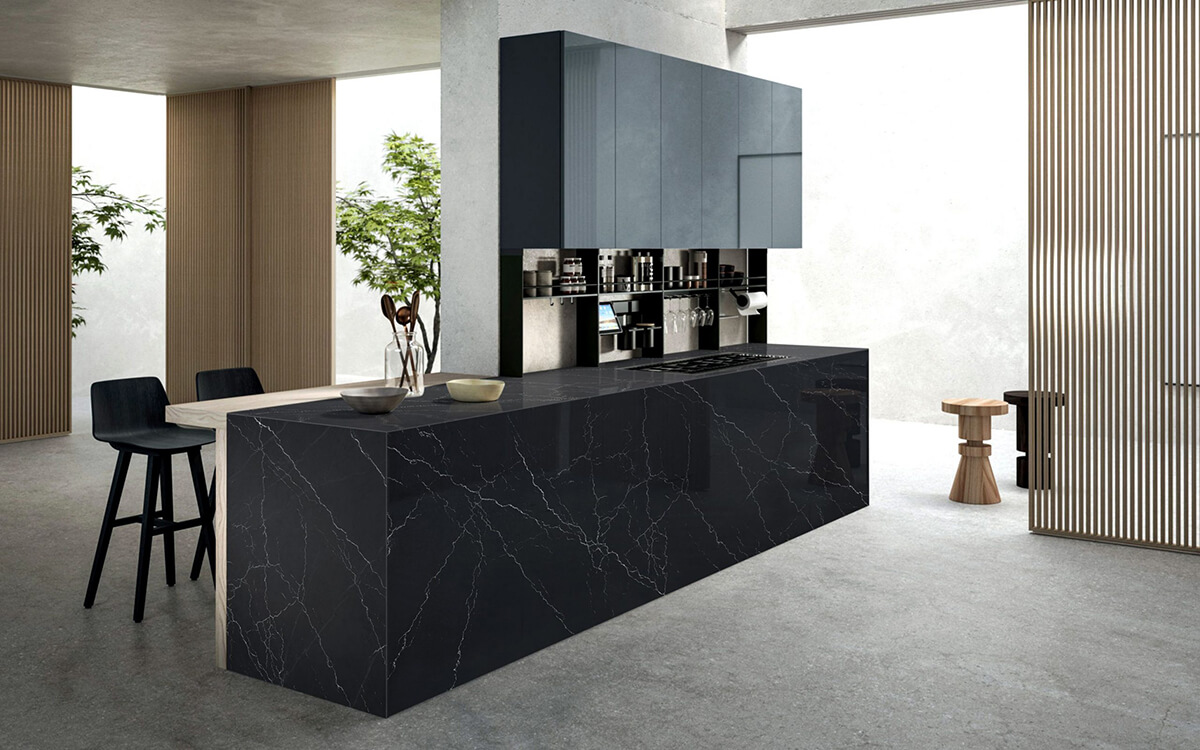
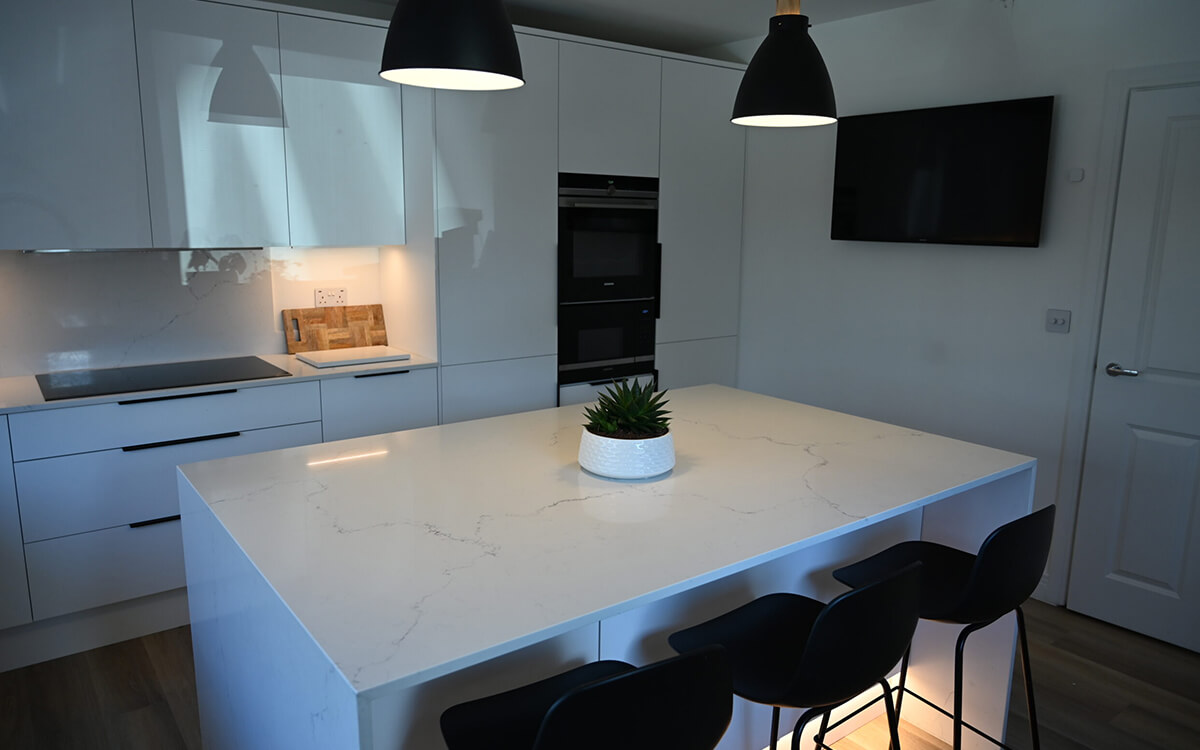
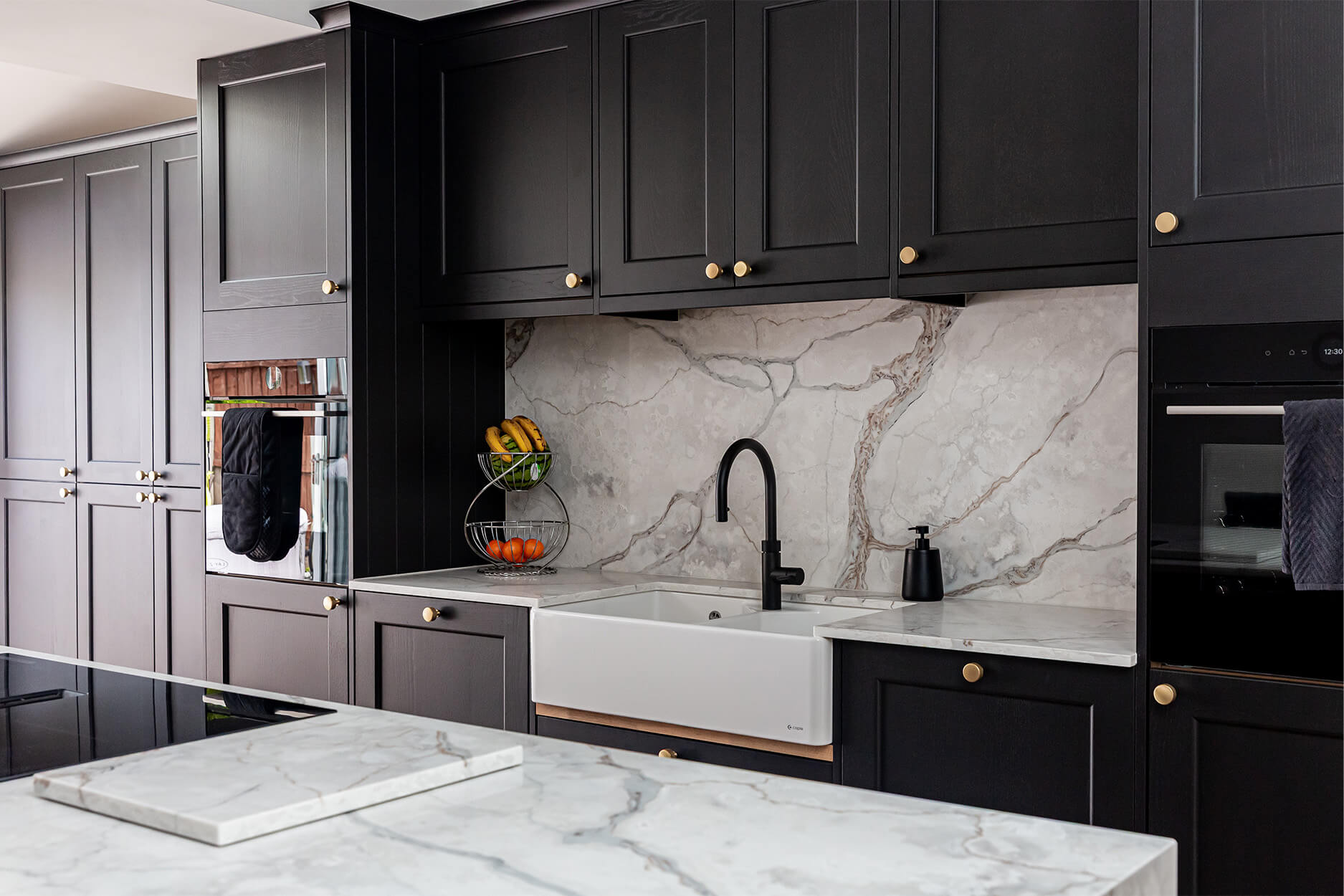
Quartz also allows manufacturers to produce stone inspired styles, including marble look designs with controlled veining and predictable movement, which can be helpful when planning islands, waterfall ends and large splashbacks.
Granite Appearance
Granite offers completely natural patterns created by mineral formations. Colours can range from deep blacks and greys to warmer tones such as gold and brown.
Many homeowners choose granite specifically for its natural uniqueness, as each slab has its own character. That individuality can be a major advantage if you want a one of a kind feature in the kitchen.
Cost Considerations
Quartz and granite worktops are both considered premium kitchen surfaces. The overall cost depends on several factors including the slab choice and the complexity of fabrication and installation.
Common cost drivers include:
- Thickness of the slab
- Edge profiles
- Cut outs for sinks, taps and hobs
- Worktop layout, joins and overhangs
- Island size and features such as waterfall ends
- Upstands and splashbacks
- Access and installation requirements
In the UK market both materials typically fall into a mid to high price range, although certain granite varieties and premium quartz brands can increase the cost. The most reliable way to compare costs is to price the same layout in both materials with like for like fabrication and installation.
Suitability for Modern Kitchens
Both materials work well in contemporary kitchen designs, but they appeal to slightly different preferences.
Quartz worktops are often chosen for:
- Modern kitchens with clean lines
- Consistent colour schemes
- Marble look designs with minimal maintenance
- Family kitchens where stain resistance is important
Granite worktops are often chosen for:
- Homeowners who prefer natural materials
- Kitchens with traditional or transitional design styles
- Situations where maximum heat resistance is desirable
- Projects where natural stone character is a key feature
Our Experience Installing Worktops
In our experience installing quartz and granite worktops across Essex and London, many homeowners initially choose between the materials based purely on appearance.
However practical factors such as maintenance expectations, cooking habits and kitchen layout often become more important over time.
For example, households that cook frequently with high heat sometimes prefer granite due to its strong heat resistance. Meanwhile busy family kitchens often favour quartz because of its low maintenance and stain resistant surface.
Understanding how the kitchen will actually be used helps guide the most suitable choice.
Choosing Between Quartz and Granite
There is no single material that is best for every kitchen. The decision usually comes down to priorities and lifestyle.
Choose quartz worktops if you want:
- Minimal maintenance
- Consistent colour and pattern
- Strong stain resistance
- Modern design options and predictable aesthetics
Choose granite worktops if you want:
- Natural stone character
- Strong heat resistance
- Unique patterns and mineral movement
- Traditional stone aesthetics with individuality
Both materials provide long lasting durability when professionally fabricated and installed.
We supply and install stone worktops across Essex, London, Hertfordshire and Kent, helping homeowners choose materials that suit both their kitchen design and long term durability requirements.
Frequently Asked Questions
Are quartz worktops better than granite?
Quartz worktops are often preferred for their low maintenance and stain resistance, while granite is valued for its natural appearance and strong heat resistance. The best option depends on how the kitchen will be used.
Which worktop lasts longer, quartz or granite?
Both materials can last decades when properly installed and maintained. Granite may require occasional sealing, while quartz typically requires less ongoing maintenance.
Can you put hot pans on quartz worktops?
Short contact with warm items is usually safe, but direct contact with very hot pans may damage the resin content of quartz surfaces. Using heat pads or trivets is recommended.
Is granite more expensive than quartz?
Prices for quartz and granite worktops are often similar, although specific stone types, slab quality and installation complexity can affect the final cost.
Do granite worktops need sealing?
Yes. Granite is a natural stone that usually requires sealing to maintain stain resistance. The frequency depends on the stone and kitchen usage.